

SGP Quality Engine
Machine builders supplying pharma often struggle to keep scope, execution, and documentation aligned as projects move from URS to final validation.
The SGP Quality Engine is an ISPE GAMP 5 execution model that defines what needs to happen at each phase, and how everything connects from URS through to sign-off.
Three benefits
Predictable projects
Design direction locked before work begins
Your team knows what to build, your customer knows what they’re getting
Scope changes go through a controlled process, not ad hoc decisions
Scope you control
Requirements traced from URS through design to test
When requirements change, the impact on design and test is visible straight away
No surprises at FAT
Documentation that holds up
Structured package ready for regulatory qualification
The same document structure on every project
A Supplier Quality Plan aligned with ISPE GAMP 5 and supplier QMS from project start
What the model covers
The SGP Quality Engine covers five phases: Planning, Specification, Configuration, Verification, and Reporting. Each phase has a defined output, so your team always knows what’s done, what’s pending, and what the customer has approved.
The model has two components:
-
Specification
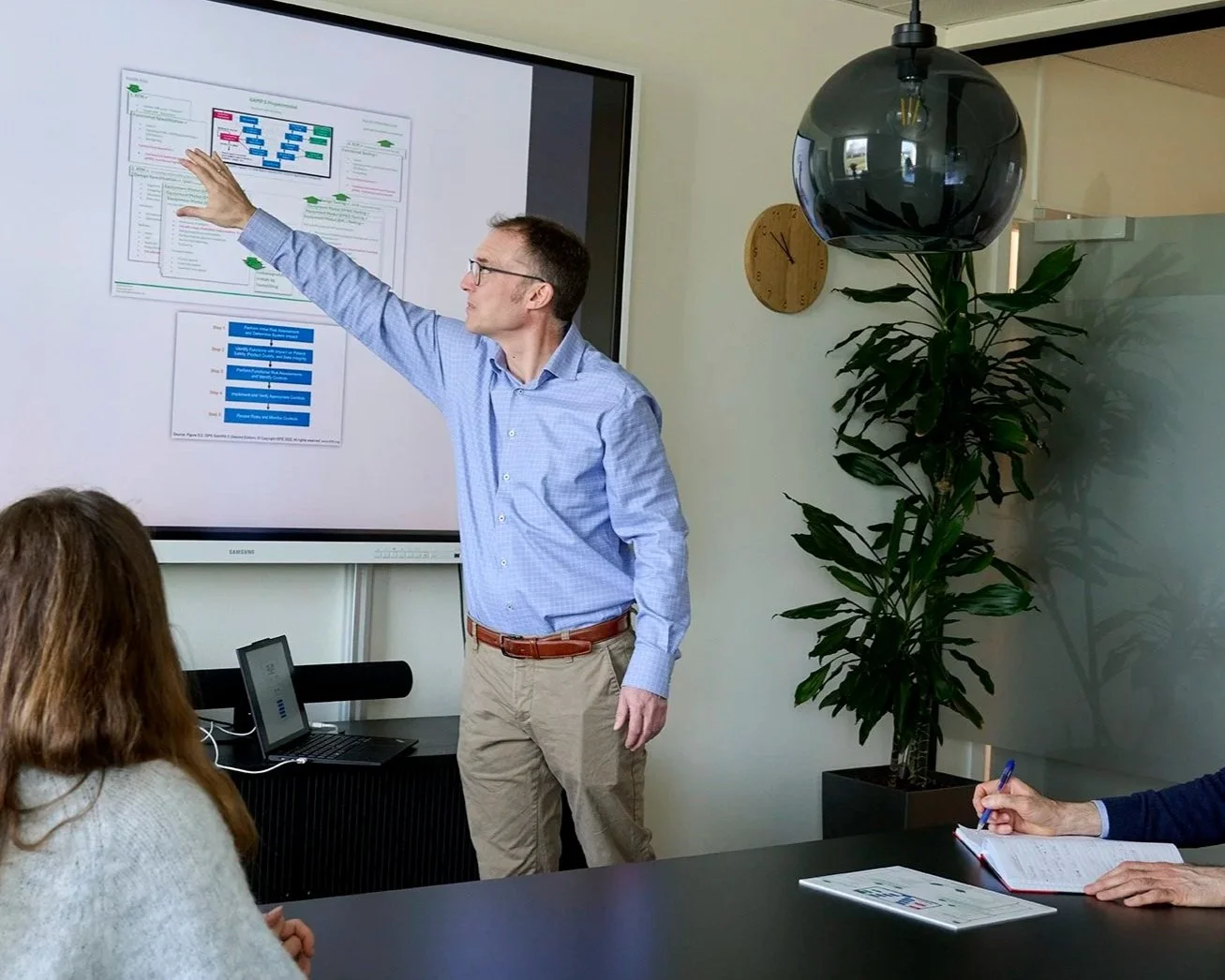
Intended use drives the URS into functional requirements before design decisions are locked. Fail-safe design is built into the specification structure: each function is linked to a risk scenario, a barrier, a consequence, and an event type. All teams work from the same foundation.
-
Compliance and traceability
The Requirement Traceability Matrix connects every URS requirement to its design implementation and test result. When requirements change, the impact is visible straight away and the change log is automatic. Because the model uses a consistent structure across all document types, a substantial part of each document carries over from project to project.

What it gives your team
Engineering Manager
Reliable estimates you can stand behind at the point of sale
Scope defined early enough that changes go through a controlled process
Status overview across the full project
Designer and Engineer
Known tasks and defined scope from the start
No wasted time on process discussions
Focus on technical work, not documentation catch-up
QA
Document structure aligned with ISPE GAMP 5
Traceability and change log built into the model
Audit-ready documentation without added work at the end
Purchaser and BU Manager
A known process with comparable status across projects
Issues surfaced early, before they become costs
A clear basis for prioritising and deciding
Business impact
The model addresses the two places where money is lost on these projects: scope that grows without being controlled, and corrections absorbed at the end.
When all disciplines work from the same data set, parallel work becomes possible and delays stop compounding. Larger projects become manageable without adding headcount.
Frequently Asked Questions
-
The model ensures that the design direction is locked early, so that the documentation and the machine stay perfectly consistent. By integrating ISPE GAMP 5 compliance directly into how the machine is specified and designed - rather than treating it as a separate track - you avoid "project explosions" where test plans and specifications no longer match the finished machine.
-
A common issue is that critical knowledge is held by only a few specialists, meaning work cannot be easily shared when they are overstretched. The SGP Quality Engine creates a repeatable structure and process that the entire team owns. This gives the team the flexibility for others to step in and share the workload, regardless of the project.
-
Instead of documentation being an administrative burden, the model delivers high-value deliverables where requirements are traced from URS through design to test. The customer receives a detailed package that is fully ready for regulatory qualification.
-
In many projects, specifications are written after the design is finished, leading to a drift between documentation and execution. The SGP Quality Engine makes compliance an active part of the design process from the start. It combines "master builder" experience with lean project execution, ensuring that documentation, validation, and execution stay in sync.
-
Yes. The model eliminates the need to rewrite templates for every new customer. By applying the same structure to every project, your team can improve with each task rather than starting from the same point every time.
-
Loss of confidence typically occurs when there is a mismatch between the machine, its specifications, and the final test plans. The SGP Quality Engine avoids this by locking the scope and design direction early in the process. This ensures that your team knows exactly what they are building and the customer knows exactly what they are receiving, fostering better collaboration and ensuring that everyone stays aligned from start to finish.